
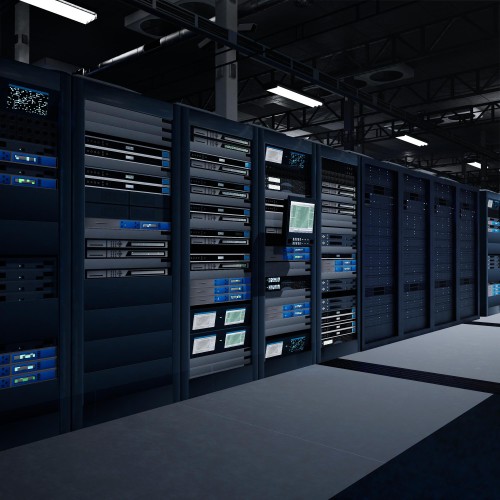
In a significant development for global computing, China has reclaimed the top spot in the realm of supercomputers with its LineShine system. Positioned at the National Supercomputing Centre in Shenzhen, LineShine utilizes domestically developed chips, pushing past the previously leading system from the United States. This accomplishment underscores China’s advancements in homegrown computing technologies, although experts caution that it doesn’t necessarily indicate an overall supremacy over the U.S. in the field of artificial intelligence.
The LineShine’s dominance in the supercomputer rankings marks a notable achievement for China, yet analysts emphasize that these rankings primarily assess machines configured for scientific computing tasks. This leaves out a host of powerful AI systems that large technology companies develop, which are not considered in these evaluations. Thus, while the LineShine sets a benchmark in scientific computing, its implications for AI capabilities remain nuanced, given that advanced AI computation is heavily reliant on specialized chips and vast data center infrastructures.
China’s rise to the top of the supercomputer list is interpreted as a move towards strengthening its self-reliance in chip design and computing technology. However, the nation still faces significant hurdles, particularly concerning access to advanced AI chips, which are crucial for pushing the boundaries of AI development. These constraints pose ongoing challenges that China must navigate to fully realize its AI ambitions.
The rivalry in high-performance computing between China and the United States is intensifying, with both nations channeling substantial investments into artificial intelligence, quantum technology, and emerging computing systems. This competitive landscape highlights the strategic importance both countries place on technological supremacy and innovation, reflecting broader geopolitical dynamics in the tech sphere.