
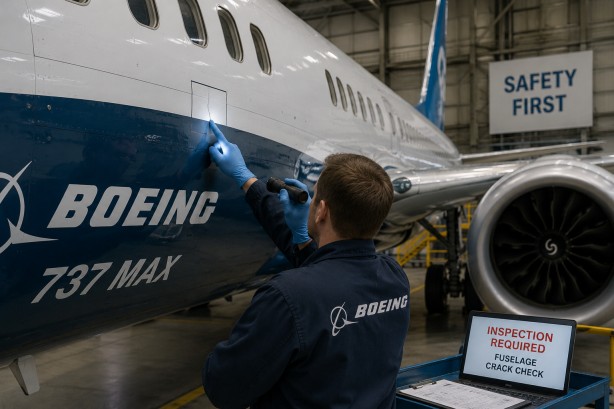
The U.S. aviation authorities have mandated checks on Boeing 737 Max aircraft, instructing operators to examine these planes for potential fissures in a key structural area of the fuselage. This directive impacts around 471 aircraft, with inspections slated to commence in September. The inspections will concentrate on the bear strap—a structural component that reinforces the fuselage near the exit doors. This precautionary measure stems from the discovery of similar cracks in older Boeing 737 Next Generation models, which led to a call for inspections of those planes as well.
Even though no issues have been detected in the current 737 Max fleet, regulators emphasize that the aircraft shares a comparable design and manufacturing approach with its predecessors, thus posing a potential risk for similar defects to appear. Authorities have cautioned that unnoticed cracks could compromise a critical structural part of the aircraft, potentially jeopardizing its overall structural integrity.
Boeing has expressed its full cooperation with airlines regarding this issue since it was first identified in 2019 and endorses the regulatory inspections. The company has assured that these evaluations are intended to spot and rectify problems before any cracks develop to a critical stage.
The newly mandated inspections add another layer to the scrutiny faced by the 737 Max, which has been under the microscope following past safety incidents and lingering questions about its manufacturing and engineering standards. This aircraft model was previously grounded globally after two tragic crashes in 2018 and 2019.