
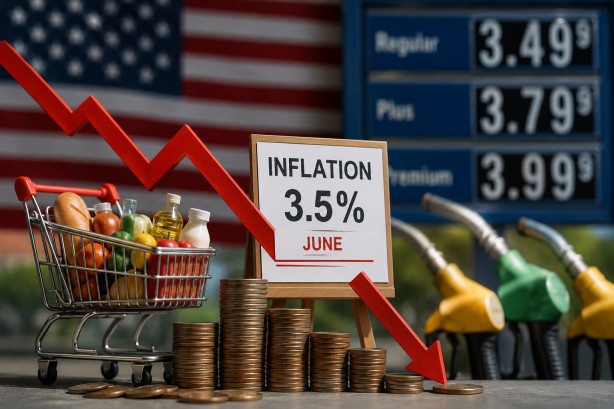
The United States saw a slowdown in annual inflation to 3.5% in June, largely due to a temporary drop in energy prices that eased overall consumer expenses. This decline follows a period of higher inflation in previous months, with the Consumer Price Index (CPI) showing a 0.8% decrease from May. The primary factor behind this monthly reduction was the significant fall in gasoline and fuel prices, which helped counterbalance the rising costs of food, housing, utilities, and other essential goods.
Core inflation, which provides a more stable measure by excluding the fluctuating prices of food and energy, dipped to 2.6% annually. This measure is particularly significant to the Federal Reserve as it considers long-term economic policies. Despite the recent decrease, there are concerns that the relief may be short-lived, as tensions in the Middle East have caused global oil prices to climb once more. The increase in crude oil prices is already being felt by consumers at the pump and is adding to operational costs in sectors like aviation and transportation.
The Federal Reserve is poised to evaluate the latest inflation figures in conjunction with labor market conditions at its forthcoming policy meeting scheduled for later this month. While there has been a moderation in inflation rates, they still exceed the central bank’s target of 2%, creating a layer of uncertainty about when interest rate adjustments might occur. The ongoing fluctuation in energy prices remains a critical factor in these considerations.
As the Federal Reserve prepares for its meeting, the impact of rising crude oil prices continues to loom over both consumers and industries. This development underscores the volatility of energy prices and their capability to influence broader economic indicators significantly. The central bank’s decision-making will likely weigh these dynamics heavily as it seeks to balance economic growth with inflation control.