
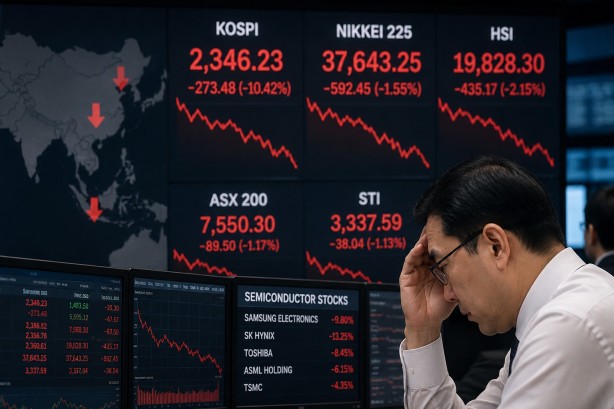
Tuesday saw a downturn in Asian stock markets, with South Korea experiencing a significant decline. The Kospi index took a hit, dropping over 10% as semiconductor stocks faced intense selling pressure. Key players like Samsung Electronics and SK Hynix saw their shares plummet by about 12%. This slump came amid investor apprehension about the escalating competition from Chinese AI startups and chipmakers, which could potentially hinder the expansion of the global artificial intelligence sector.
Elsewhere in the region, most major markets mirrored this downward trend. Japan’s Nikkei, Taiwan’s Taiex, Hong Kong’s Hang Seng, and China’s Shanghai Composite all closed with losses. In contrast, Australia’s S&P/ASX 200 stood out as the sole major index to end the day in positive territory, defying the regional trend.
In the commodities market, oil prices experienced a decline. This movement was largely attributed to a de-escalation in tensions between the United States and Iran. The easing of these geopolitical frictions sparked optimism for potential diplomatic negotiations, thereby alleviating some concerns over global energy supply disruptions.
Investors remain vigilant as they assess the implications of these market movements. The focus is not only on the semiconductor sector’s challenges but also on how geopolitical developments influence energy markets. These complex dynamics continue to shape the regional economic landscape, reflecting broader global trends.