
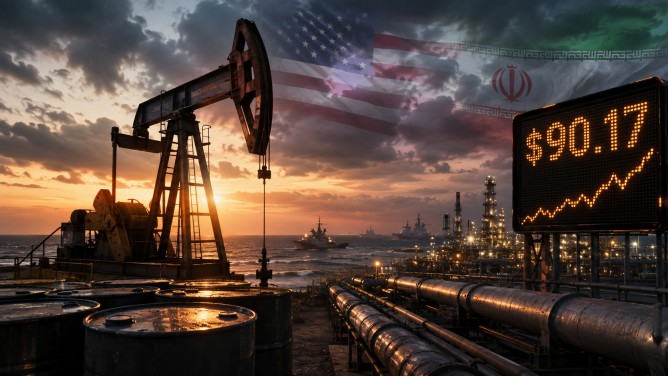
Oil prices experienced a significant surge as negotiations between the United States and Iran concluded without reaching a peace agreement, intensifying concerns about the potential for prolonged conflict and its impact on global energy supplies. Brent crude surpassed the $90 mark, peaking at approximately $91.63 per barrel, marking its highest level since July 30. The price hike followed a strong stance from US President Donald Trump, who demanded Iran’s surrender and warned of possible escalation if diplomatic solutions remain elusive.
The strategic Strait of Hormuz, a pivotal oil shipping route, has seen a considerable decline in commercial vessel traffic, exacerbating fears of extended disruptions to oil supplies. This development has put investors on high alert, anticipating potentially lengthier interruptions that could further elevate crude prices. The threat of reduced or halted traffic through this crucial passageway amplifies concerns over global energy stability.
Iran has signaled the possibility of adopting a more assertive military approach should negotiations falter. Reports of an attack on a cargo vessel transiting the strait have intensified worries about the safety of maritime operations in the region, adding to the already volatile situation. The prospect of increased military activity underscores the precariousness of the current geopolitical landscape.
Analysts caution that the ongoing conflict in the Middle East, coupled with the continuing war in Ukraine, may introduce additional volatility into the global energy markets. These combined tensions could precipitate further spikes in oil and gas prices, compounding the challenges facing an already fragile economic environment.